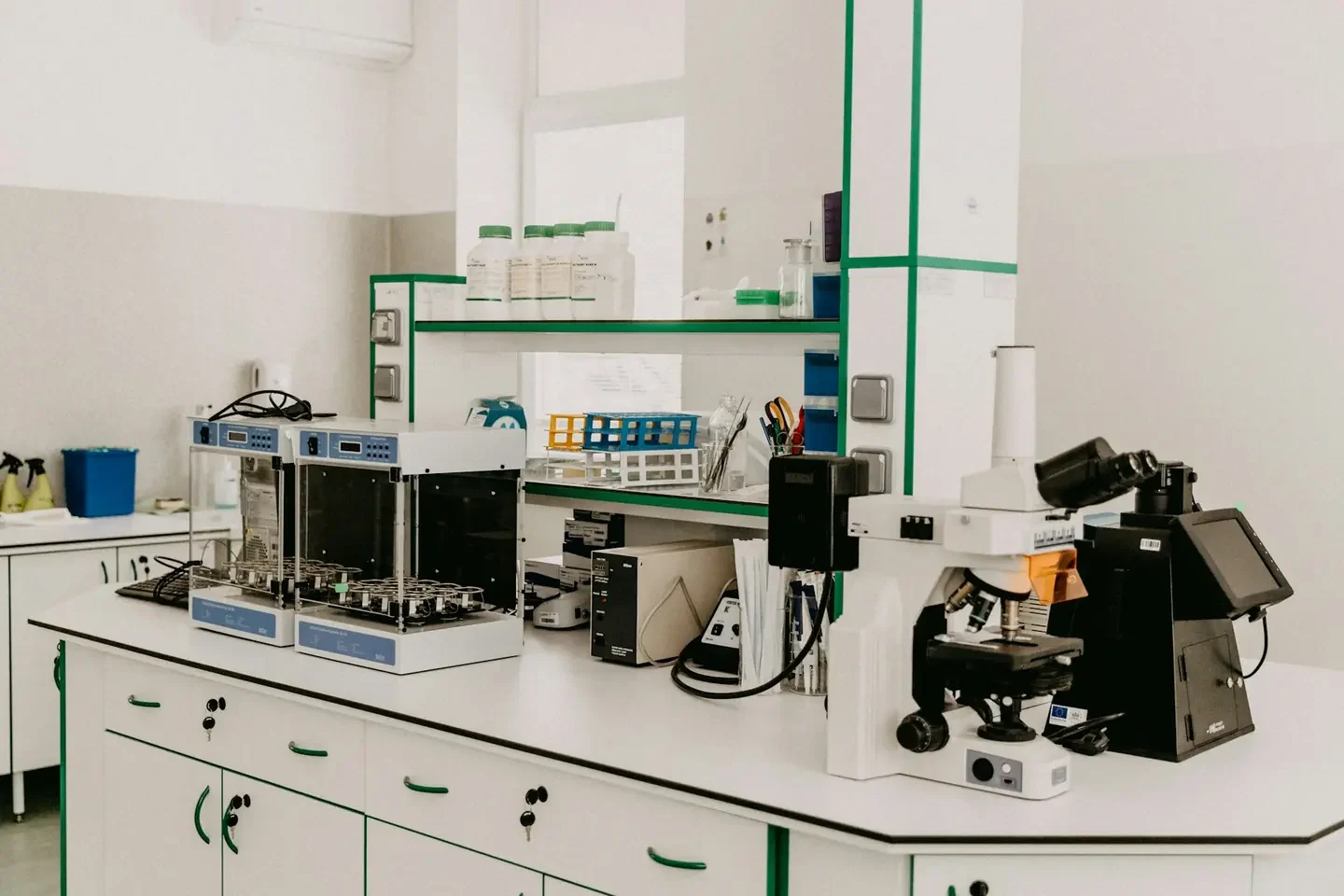

A certificate of analysis (COA) is a document — issued by a manufacturer or an independent lab — that states the test results for a specific batch or lot of a product and confirms it meets the agreed specification. It's the buyer's assurance that what they're receiving actually matches the quality they bought.
What is a certificate of analysis?
A COA ties results to a particular batch: for each quality parameter it shows the specification, the test method, and the actual result. Buyers, regulators, and customs may all require it before goods are accepted or released.
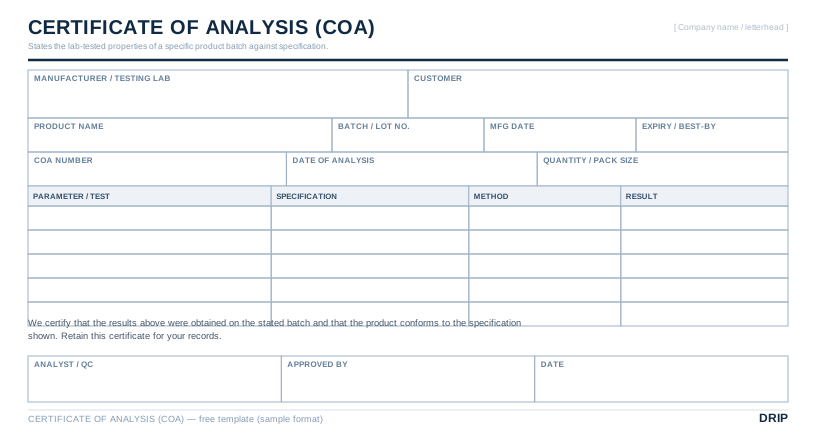
What a COA contains
- Manufacturer / testing lab and customer details
- Product name, batch/lot number, manufacture date, and expiry
- COA number and date of analysis
- A results table: parameter/test, specification, method, and result
- A statement of conformity and authorized sign-off
Free Certificate of Analysis Template
Below is a free, blank certificate of analysis (COA) template. Use it to report the tested parameters, specifications, methods, and results for a product batch. Download the certificate of analysis template
Industries that require a COA
COAs are standard in pharmaceuticals, food and beverage, nutraceuticals, cosmetics, chemicals, and agricultural commodities — anywhere purity, potency, or composition must be verified. For regulated imports, the COA often accompanies the inspection certificate and shipping documents at customs.
COA vs. inspection certificate
A COA reports laboratory test results against specification for a batch. An inspection certificate more broadly confirms goods were examined and conform to the order — it may cover quantity, packing, and condition as well as quality.
FAQ
What is a certificate of analysis (COA)? A document from a manufacturer or lab stating the test results for a specific product batch and confirming it meets the agreed specification.
What does a certificate of analysis include? Product and batch details, the testing lab, a table of parameters with their specification, method, and result, and a signed statement of conformity.
Which industries require a COA? Pharmaceuticals, food and beverage, nutraceuticals, cosmetics, chemicals, and agricultural commodities commonly require a COA to verify purity, potency, or composition.
What is the difference between a COA and an inspection certificate? A COA reports lab test results against specification for a batch; an inspection certificate confirms goods were examined and conform to the order, often covering quantity and condition too.
Drip Capital gives US businesses fast, collateral-free working capital to buy inventory and bridge long payment terms. See if you qualify →