

A debit note and a credit note are documents that adjust the amount owed on a previously issued invoice. They're how businesses correct over- or under-billing, handle returns, and record price changes — without tearing up the original invoice.
Debit note vs. credit note
- A credit note (issued by the seller) reduces the amount the buyer owes — for returned goods, an overcharge, a post-sale discount, or damaged items.
- A debit note (issued by the buyer, or by the seller for an undercharge) increases the amount owed — for returns the buyer is charging back, or extra charges not on the original invoice.
In short: a credit note is money back in the buyer's favor; a debit note is an additional charge.
When each is used
| Situation | Document | Who issues |
|---|---|---|
| Buyer returns goods | Credit note | Seller |
| Seller overcharged on the invoice | Credit note | Seller |
| Post-sale discount granted | Credit note | Seller |
| Seller undercharged (bill more) | Debit note | Seller |
| Buyer charges back a return/defect | Debit note | Buyer |
What to include
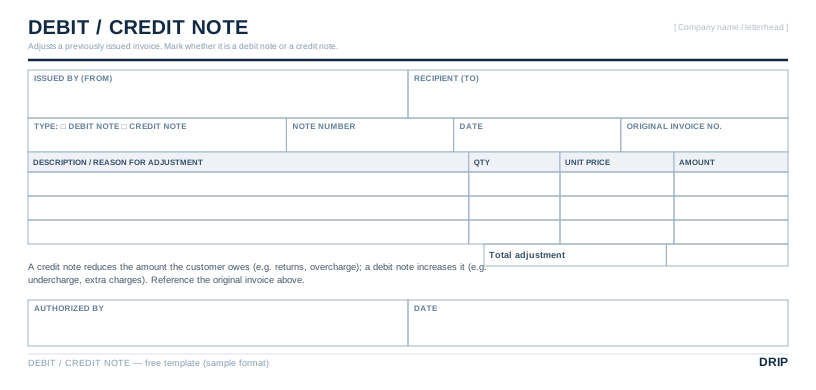
- Whether it's a debit or credit note
- Note number and date
- Original invoice number being adjusted
- Reason for the adjustment, quantities, and amounts
- Total adjustment and authorized signature
Free Debit / Credit Note Template
Below is a free, blank debit/credit note template. Mark whether it is a debit or credit note, reference the original invoice, and list the adjustment. Download the debit/credit note template
Why they matter for your books
Debit and credit notes keep your accounts receivable and payable accurate and create a clean audit trail for tax. Accurate receivables also matter if you use invoice financing — financiers advance against the correct, adjusted invoice value.
FAQ
What is the difference between a debit note and a credit note? A credit note reduces the amount a buyer owes (returns, overcharges, discounts); a debit note increases it (undercharges or extra charges). The credit note favors the buyer, the debit note the seller.
Who issues a credit note? Usually the seller, to reduce what the buyer owes — for example after a return, an overcharge, or a post-sale discount.
Who issues a debit note? Either the buyer (to charge back returns or defects) or the seller (to bill an amount undercharged on the original invoice).
Does a credit note refund money? Not always as cash. It reduces the outstanding balance or is offset against future invoices; a cash refund is separate unless agreed.
What should a debit or credit note reference? It should always reference the original invoice number it adjusts, plus the reason, amounts, and date.
Drip Capital gives US businesses fast, collateral-free working capital to buy inventory and bridge long payment terms. See if you qualify →