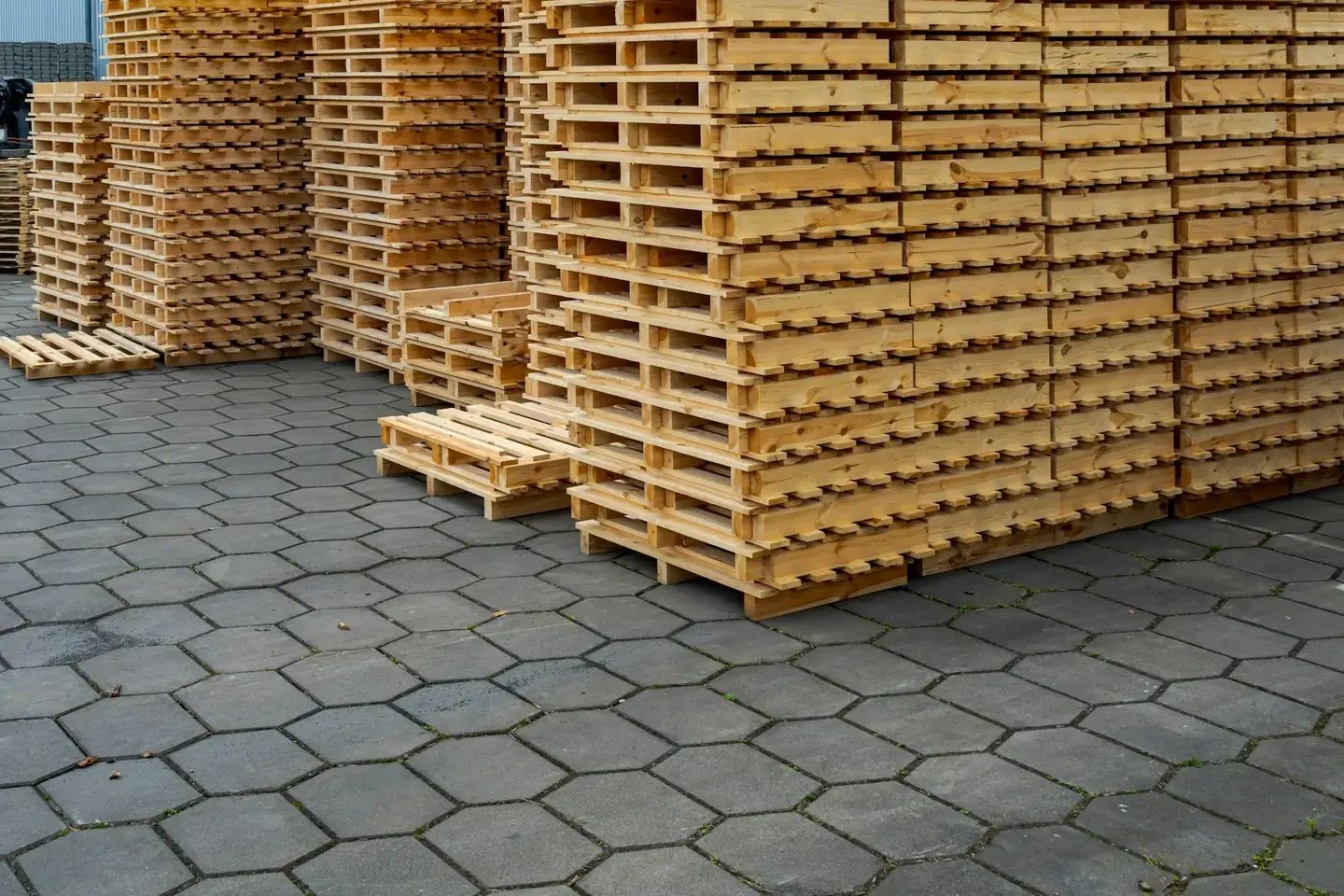

The shipping industry is one with unique intricacies and complexities. Every day, trailers are loaded with tons of shipments – a combination of delicate items next to bulkier ones. These shipments often belong to small business owners who do not need full truckloads but only a portion of the space. In such cases, relying on guesstimates becomes risky as several questions are left unanswered – what is the exact shipping cost for a shipment? Will a shipment with glass items be safe against a pallet of bricks? Which shipments contain liable substances and need special care? Standardizing shipments through freight class is the only way to bring uniformity to the fragmented shipping landscape.
Freight class is the NMFC number (50 to 500) that sets your LTL shipping rate. To find it, divide the shipment's weight by its cubic feet to get density in pounds per cubic foot, then match that density to the NMFC chart. Use the free freight class calculator below, which uses the updated 13-band density scale that took effect on July 19, 2025.
Freight Class Calculator
Example: a 48 x 40 x 48 inch pallet weighing 500 lbs is 53.33 cubic feet, so its density is 500 ÷ 53.33 = 9.38 pcf. That falls in the 8 to under 10 pcf band, which is class 100.
Freight Class Chart: 2025 NMFC Density Scale
On July 19, 2025, NMFTA's Docket 2025-1 moved many commodity-specific NMFC items to density-based classification and expanded the density scale from 11 to 13 bands. The bands below 30 pcf did not change. Freight of 30 pcf or more, which was all class 60, is now split into classes 60, 55 and 50.
| Density (lbs per cubic foot) | Freight class (from July 19, 2025) | Class before July 19, 2025 |
|---|---|---|
| Less than 1 | 400 | 400 |
| 1 to under 2 | 300 | 300 |
| 2 to under 4 | 250 | 250 |
| 4 to under 6 | 175 | 175 |
| 6 to under 8 | 125 | 125 |
| 8 to under 10 | 100 | 100 |
| 10 to under 12 | 92.5 | 92.5 |
| 12 to under 15 | 85 | 85 |
| 15 to under 22.5 | 70 | 70 |
| 22.5 to under 30 | 65 | 65 |
| 30 to under 35 | 60 | 60 |
| 35 to under 50 | 55 | 60 |
| 50 or more | 50 | 60 |
Some commodities still carry their own NMFC item and class, so check the item number for your product with your carrier or NMFTA before you ship.
What is a Freight Class?
As established by the National Motor Freight Traffic Association (NMFTA) , freight class refers to the system of identifying the "transportability" of commodities within the shipping industry. This grouping system also helps in standardizing Less-Than-(truck)Load (LTL) shipments to ensure shippers get an unbiased price. Less than truckload or less than load shipping pertains to small quantities of freight, generally between 150 pounds (individual parcels) and 15,000 pounds (full truckloads). The NMFTA categorizes freight into 18 classes (coded 50 to 500) based on density, handling, liability and stability. The general rule of thumb for calculating shipping costs is the lower the freight class, the lower the price and vice-versa. For instance – steel rods and pipes have a lower freight class classification compared to glass (which requires special care to avoid damage).
What is the Purpose of Freight Class?
On its surface, freight class communicates how easy or challenging it is to ship a commodity safely from its origin to its destination. From a bird's eye view, the shipping industry is made of constantly moving pieces through different modes of transport, companies, and locations. The cogs in the machine are subject to change as the industry speedily evolves, now dissected into intermediaries such as freight advancers, brokers, third-party logistics companies (3PLs). etc. Navigating such a morass can be overwhelming without shipping standards to refer to. The freight class grouping system acts as a junction where all the variable elements of the shipping industry meet. No two shipments are identical, even those packed in a standardized pallet. For instance – a pallet of bricks will be considerably heavier than a pallet of pillows. Then there are the size, danger, and liability factors to consider – shipments are smaller or larger than others, and some need special care to avoid damage, while are at risk of being stolen along the way. The freight class system makes room for each factor to ensure every shipment receives the care it needs to reach the destination safely. Every shipment passes through various parties before reaching the end consumer. These include warehouse staff, over-the-road carriers, freight forwarders, etc. With the help of the freight class system, each party knows exactly how to price their puzzle piece. This eliminates confusion. Finally, the party shipping the freight gets an accurate shipping cost estimate. To avoid reclassing hassles, getting the shipment's freight class correct is crucial.
How is Freight Class Calculated?
In general, there are two ways to calculate freight class – the manual and the automatic method. The manual process involves four steps – Step 1 The first step is to weigh the shipment correctly. A National Type Evaluation Program (NTEP)-certified weight machine or forklift generally offers the most accurate results. It is essential that the weight be accurate as it is later used to determine shipment density.
Step 2 This step involves measuring the shipment’s dimensions. For shipments sitting on a pallet, the extremes are measured (length and width). Accurate results are only achieved when the commodities do not overhang from the pallet. Overhanging freight not only leads to price adjustments in the future but also is less secure during transit. Step 3 Density is a vital component of freight classification. However, the cubic feet is determined first after dividing the product of shipment dimensions (LxBxH) by 1,728 (since a cubic foot contains 1,728 inches). Density is then calculated by dividing the parcel’s weight by the cubic feet.
Step 4 Though density alone gives a nearly clear picture of the shipment's freight class, the only way to be sure is to refer to the NMFTA's list. This is because other factors (besides density) are also considered, such as ease of handling, stowability, value, and liability. For instance – a shipment with higher density will still receive a high freight class if it is challenging to handle or highly liable.
In the case of an online automatic calculator, the process becomes simpler – Step 1 – Check the website for a LTL freight classification tool or calculator. Step 2 – Choose the shipment category– building sheet metal, automotive parts, furniture, apparel, etc. Step 3 – Enter the shipment’s weight (in pounds) and dimensions (length, breadth, height). A standard pallet measures 48 inches length-wise and 40 inches width-wise. Step 4 – The tool automatically displays the respective freight class number the shipment belongs to.
How is Freight Class Determined?
In general, four main factors help determine the freight class to which each commodity belongs. These include –
Density of the Shipment Though not all commodities' freight class depends upon density, some are exclusively density-based. This factor is calculated by dividing the shipment's total weight (in pounds) by its total cubic feet. The density is determined in pounds per cubic foot. Typically, the higher the shipment's density, the lower its freight class and shipping cost. Though this may seem counterproductive on the surface, the logic is that dense freight packs more weight into less trailer space, while light, bulky freight takes up room that could carry other shipments. This allows carriers to accommodate a greater number of shipments into the same truck, ultimately reducing the cost for individual shipments.
Stowability of the Shipment The next factor is the ease with which a shipment may be transported or stowed with related items. Some items have a uniform shape and can easily fit along with other items in the freight. Others have non-uniform dimensions or protrusions that make it challenging to arrange shipment around them. Moreover, shipments must have uniform surfaces for easy load-bearing and freight stacking. Similarly, some shipments contain hazardous substances that cannot be shipped along with non-hazardous items. The thumb rule here is that the greater the stowability of the shipment, the lower its freight class, and shipping cost.
Ease of Handling Generally, every shipment must travel through various distribution units and checkpoints before reaching its destination. Robotic arms and other machines can load and unload shipments in most cases. However, some can be challenging to handle owing to strange dimensions, heavy weight, hazards, etc. Such shipments require special care, right from loading to unloading and delivery. Carriers generally categorize them under a high freight class, increasing the overall shipping cost.
Liability of the Shipment Shipment liability refers to the likelihood or probability of a shipment being damaged or stolen. Even shipments that pose a potential threat to other packages in their proximity are considered to be liable. Such shipments are also difficult to transport and need special care. Perishable items and inflammable or combustible shipments are highly liable and categorized as a high freight class. Shipping them will naturally increase the overall charges.
What Are Freight Classes Categorized?
In total, the NMFTA categorizes freight into 18 different classes, ranging from code 50 to 500. Each freight class includes commodities based on density, stowability, ease of handling, and liability. Freight costs increase with each freight class. The 18 classes are 50, 55, 60, 65, 70, 77.5, 85, 92.5, 100, 110, 125, 150, 175, 200, 250, 300, 400 and 500. For density-based items, the class comes straight from the freight class density chart above.
What is a True Density-Based Class?
For shipments that are easy to stow, pose no major handling issues, and are sparingly liable, the freight class is exclusively determined via density – the weight of the shipment relative to its size. Density-based shipments are becoming popular because shipping capacity is decreasing as demand increases. Freight carriers look for shipments that occupy less space or those with higher densities. Common items that are assigned their freight class based on density include auto parts, brick pallets, and crated machinery, among others. Accurately calculate shipment density to get the best possible quote.
- The first step is to identify whether or not the shipment falls under a true density-based freight class. The manufacturer of goods may help determine the shipment class, or you can check the NMFC code corresponding to the shipment.
- Next, measure the shipment's weight and size. Shippers can experiment with different packaging containers to ensure the shipment is packed as tightly as possible without risking damage. The measurements of the outer packaging (box) are taken into account.
- Then measure density. The same is calculated by multiplying shipment measurements (LxWxH) and dividing the answer by 1,728 (cubic inches per foot). This gives the cubic feet of the shipment. Finally, the shipment’s weight is divided by its cubic feet to derive density.
- The accurate density obtained can be used while quoting to get the best shipping price.
How Freight Class Impacts Shipping Costs
Based on the “Fantastic Four” determinants of freight class, it is clear that carriers can offer better shipping rates for shipments – With higher density That are easy to stow That are easy to handle That are not liable Commodities that meet this criteria are given a low freight class classification and attract low shipping costs per pound. Shipments with low density that are challenging to arrange and handle, while being susceptible to damage are assigned a higher freight class. They also attract higher shipping costs. For instance, two 48 x 40 x 48 inch pallets take up the same 53.3 cubic feet of trailer space. If one weighs 500 pounds (9.4 pcf), it falls in class 100. If the other weighs 1,000 pounds (18.8 pcf), it falls in class 70 and pays a lower rate per pound, because it uses the same space more efficiently.
How 3PLs Use Freight Class to Reduce Shipping Costs
Also known as third-party logistics services, 3PLs take care of specific and, sometimes, all aspects of shipping operations. Through retail order automation, 3PLs enable ecommerce merchants to apply creative ways of reducing shipping costs. One such technique is making the most of the shipment’s freight class. The innovative solutions 3PLs offer may vary on a case-to-case basis. Freight costs decrease with higher density. If a shipment offers room for inflating density so that its density bumps up to the next lowest class, 3PLs will take advantage. Tighter packaging that removes empty space, or consolidating cartons onto fewer, fuller pallets, can raise density and move freight into a lower class. Another innovative solution 3PLs offer to make the most of freight class classifications is to rethink packaging. Even shipments that are challenging to handle and prone to damage can become easy to handle and stow with the right packaging. For instance – breaking down large shipments into smaller units, using pallets for heavy items, and packing in flat-surface containers that are easily stackable. This can lower freight class, thereby shipping rates.
NMFC Code vs. Freight Class: What’s the Difference?
Every commodity or shipment comes with its NMFC code and freight class. Though it is tempting to treat both as one and the same, there is a key difference. While NMFC code refers to different categories within the 18 freight classes, freight class in itself represents a specific bracket or category of commodities. Two different commodities can share the same freight class while having completely different NMFC item numbers. Freight class offers carriers a general idea of a shipment’s transportability. It is the NMFC code number that reveals the exact nature of the shipment, thereby facilitating a more accurate quote. The NMFTA database provides every commodity’s NMFC codes and additional details.
What Happens if I Provide the Incorrect Freight Class?
LTL shipping carriers are extremely strict when it comes to determining the accurate freight class of shipments. Inaccurate freight class can either result from choosing the wrong NMFC code or mistakes in calculating the shipment's weight and density. While it may seem like no big deal, even a few pounds here and there can affect shipping costs and pose a risk for accidents. If trucks are overloaded and an accident occurs as a result, a shipper with inaccurate freight class or underreported weight may receive a reduced claim amount. If a shipment's weight, size, or freight class is incorrectly represented early on, carriers reweigh the shipment to re-class it correctly. This is a costly ordeal that the shipper must ultimately bear.
Ways to Determine Freight Class Accurately
Additional inspection can be avoided simply by calculating freight class accurately. It starts with weighing and measuring the shipment carefully. Extremities must be considered, and values close to the nearest inch must be calculated. Calculating density should not pose a problem as long as the other values are correct. Finally, class determination must occur by considering the category that the shipment most closely matches. For instance – furniture and not lumber. Re-classification in case of misrepresentation is often costlier than the original shipment price. This makes careful calculation mandatory.
Free calculators: Markup calculator · Gross margin calculator · Break-even calculator · Inventory turnover calculator · Line of credit calculator · Net 30 calculator · Invoice factoring calculator
Free templates: Price list template · Invoice tracker template · Purchase requisition template
Frequently Asked Questions
What is freight class?
Freight class is a number from 50 to 500 that the National Motor Freight Traffic Association (NMFTA) assigns to LTL shipments under the National Motor Freight Classification (NMFC). It reflects how easy and costly freight is to move, based on density, handling, stowability and liability. Lower classes generally pay lower rates per pound.
How do I calculate freight class?
Multiply length × width × height in inches and divide by 1,728 to get cubic feet. Divide the total weight in pounds by the cubic feet to get density in pounds per cubic foot (pcf). Then find that density on the NMFC density chart. For example, 9.4 pcf falls in class 100.
What changed with freight class in 2025?
NMFTA Docket 2025-1 took effect on July 19, 2025. It moved many commodity-specific items to density-based classification and expanded the density scale from 11 to 13 bands, adding class 55 for 35 to under 50 pcf and class 50 for 50 pcf or more. Freight of 30 pcf or more was previously all class 60.
What freight class is 10 pounds per cubic foot?
Under the NMFC density scale, 10 to under 12 pounds per cubic foot is class 92.5.
Does pallet weight count toward freight class?
Yes. Density is based on the whole shipping unit as tendered, so include the pallet and packaging in the weight and measure the dimensions including the pallet and any overhang.
What happens if I use the wrong freight class?
If a carrier finds that the class, weight or dimensions on the bill of lading are wrong, it can reweigh and reclass the shipment and bill the difference, often with an inspection or correction fee.
Need working capital while freight is in transit? Drip Capital offers collateral-free working capital of up to $3M, with funds in 24–48 hours and 30–90 day repayment terms. Check your eligibility