
A phytosanitary certificate is an official document issued by a country's National Plant Protection Organization (NPPO) certifying that plants or plant products in a shipment have been inspected and are free from quarantine pests and diseases, and meet the importing country's requirements. It's required for most international movements of plants, seeds, fresh produce, grain, wood, and similar goods.
What is a phytosanitary certificate?
It's a pest-and-disease clearance for plant-based cargo. The format follows the International Plant Protection Convention (IPPC) model, so certificates look similar worldwide. In the United States, they're issued by USDA APHIS for exports and required by APHIS for many imports.
Which goods need one
Fresh fruits and vegetables, seeds and bulbs, cut flowers, grains and pulses, nuts, wood and wood packaging, and many processed plant products. Requirements vary by commodity and destination — always check the importing country's rules first.
What the certificate contains
- Certificate number and issuing plant protection organization
- Exporter and declared consignee
- Means of conveyance and point of entry
- Place of origin
- Description: marks, packages, botanical name, and quantity
- Any treatment (e.g. fumigation) applied
- The official declaration and the authorized officer's signature and stamp
The Official Certificate: USDA APHIS PPQ Form 577
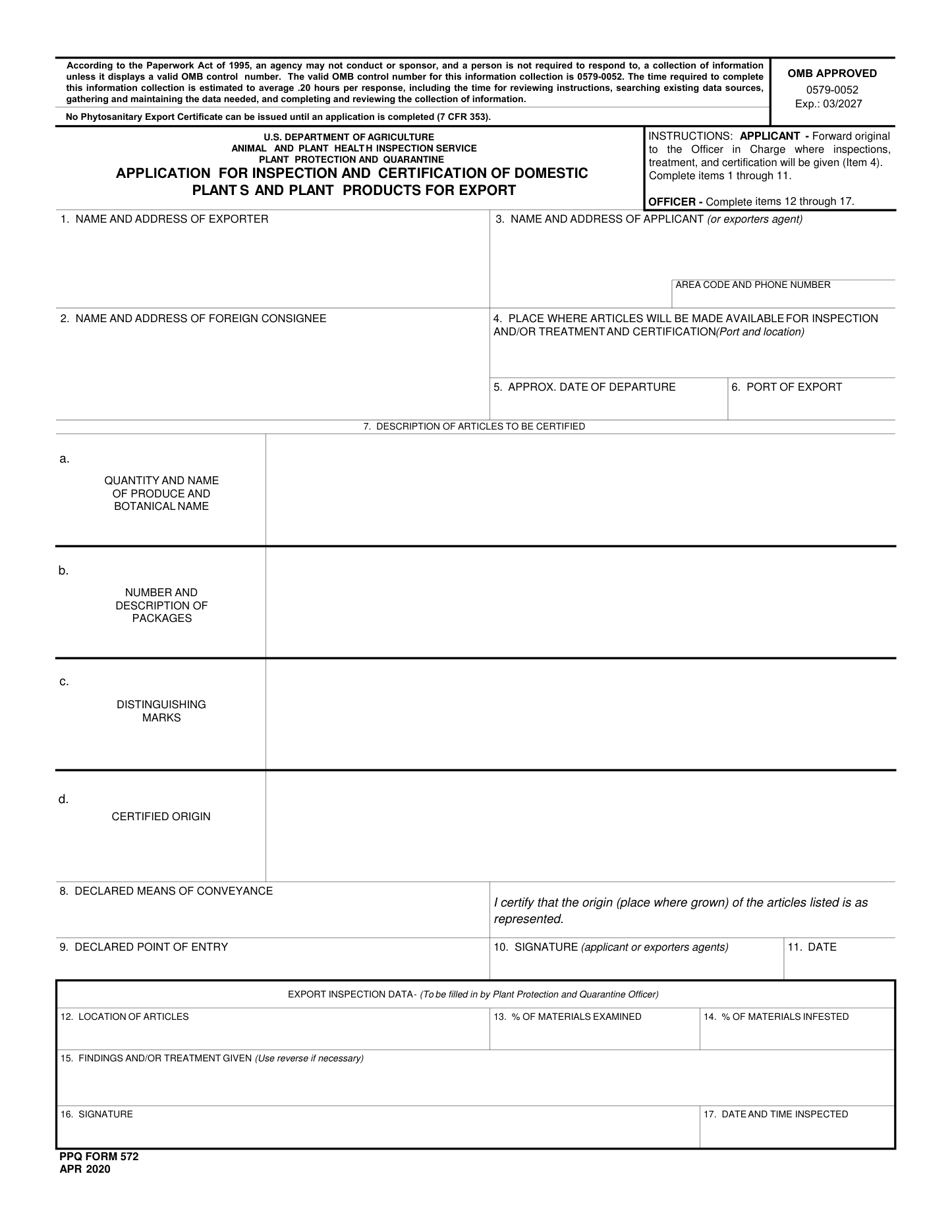
A phytosanitary certificate is an official government document — you don't create, download, or fill it in yourself. In the United States it is issued as PPQ Form 577 by a USDA APHIS Authorized Certification Official, only after your consignment has been inspected, and it is not valid until APHIS has signed, stamped, or electronically approved it. Here are the official forms and the system to apply through:
The application you complete — PPQ Form 572:
The certificate APHIS issues — PPQ Form 577 (sample):
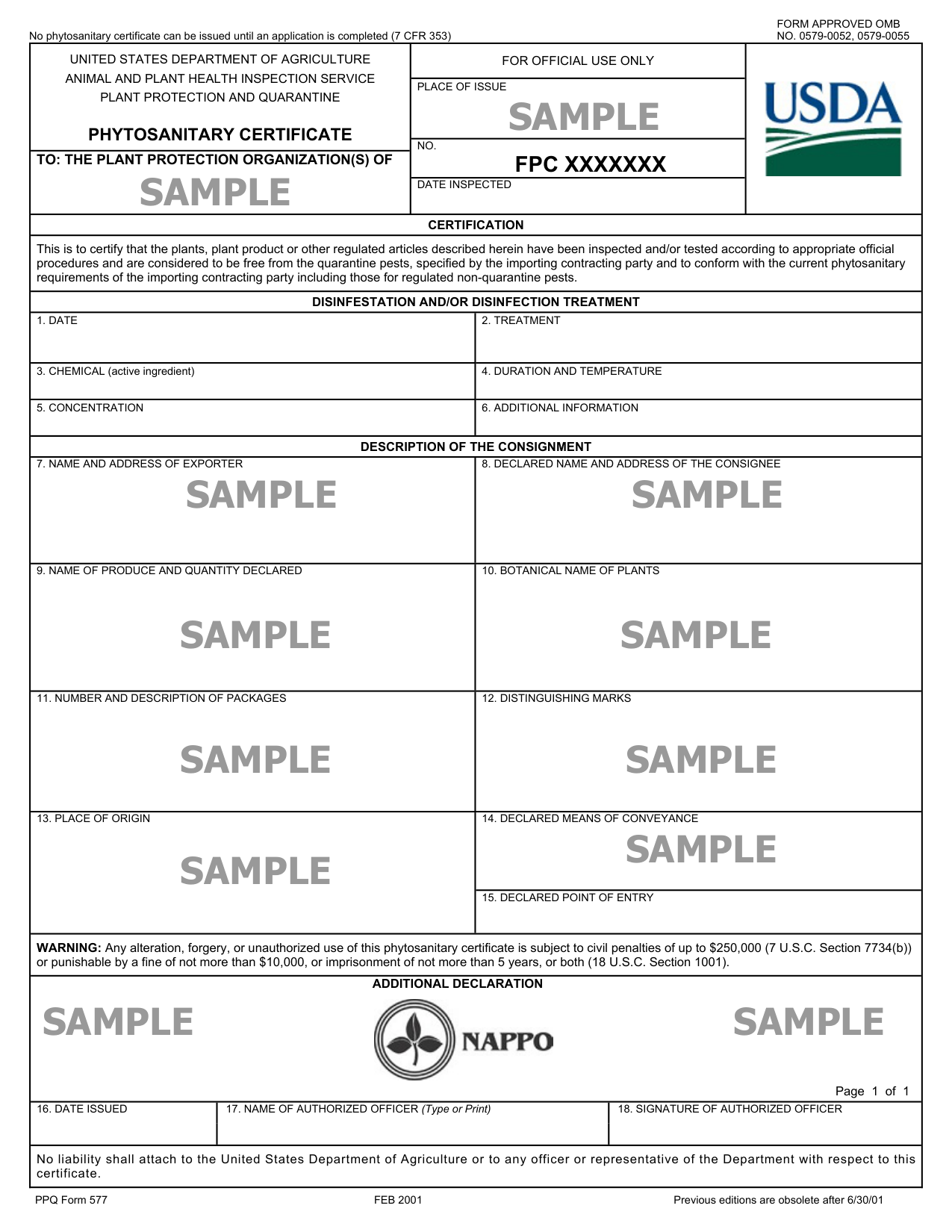
- PPQ Form 577 — the phytosanitary certificate (official format) — published by USDA APHIS; this is what the issued certificate looks like.
- PPQ Form 572 — the export application — the form you complete to request certification, which supplies the details the certifying official needs.
- Apply through APHIS PCIT — the Phytosanitary Certificate Issuance & Tracking system where US exporters submit the request and receive the certificate.
- APHIS plant exports program — commodity-specific export requirements.
How to get one (US exports)
- Apply through USDA APHIS (the Phytosanitary Certificate Issuance & Tracking system, PCIT).
- Have the consignment inspected by an authorized officer.
- Complete any required treatment (such as a fumigation step) and document it.
- The NPPO issues the signed, stamped certificate to accompany the shipment.
Related documents
A phytosanitary certificate often travels with the commercial invoice, packing list, bill of lading, and certificate of origin in the export document set.
FAQ
What is a phytosanitary certificate? An official document issued by a country’s plant protection organization certifying that plants or plant products are free from quarantine pests and meet the importing country’s requirements.
Who issues a phytosanitary certificate? The exporting country's National Plant Protection Organization. In the United States this is USDA APHIS; businesses apply through the PCIT system.
Which goods need a phytosanitary certificate? Most plant-based goods — fresh produce, seeds, cut flowers, grains, nuts, wood, and many processed plant products — though requirements vary by commodity and destination.
Can I create my own phytosanitary certificate? No. Only the authorized plant protection organization can issue a valid certificate after inspection. A template is only a reference for the fields and format.
Drip Capital gives US businesses fast, collateral-free working capital to buy inventory and bridge long payment terms. See if you qualify →